Best Smart Home Systems for Carbon Footprint Reduction
Hey there, eco-conscious tech enthusiast! Ever wondered how your smart home gadgets can actually help the planet? It's not just about convenience anymore; smart home systems are becoming powerful tools for reducing your carbon footprint. We're talking about making your home more energy-efficient, managing resources better, and ultimately, living a greener life. Let's dive into how these systems work and which ones are leading the charge.
Understanding Your Carbon Footprint and Smart Home Impact
First off, what exactly is a carbon footprint? It's the total amount of greenhouse gases—primarily carbon dioxide—generated by our actions. Everything from the electricity we use to the food we eat contributes to it. Our homes, in particular, are significant contributors, mainly through energy consumption for heating, cooling, lighting, and appliances. This is where smart home systems come in. By automating and optimizing these processes, they can significantly cut down on wasted energy and resources, directly shrinking your home's carbon footprint.
How Smart Home Automation Reduces Energy Waste
Think about it: how many times have you left the lights on in an empty room? Or cranked up the AC when you're not even home? Smart home automation tackles these inefficiencies head-on. Smart thermostats learn your habits and adjust temperatures automatically. Smart lighting turns off when no one's around. Smart plugs cut power to idle devices. It's all about making your home work smarter, not harder, to save energy.
Top Smart Home Systems for Energy Management and Sustainability
When it comes to picking a smart home system for carbon footprint reduction, you're looking for platforms that offer robust energy monitoring, automation capabilities, and integration with various eco-friendly devices. Here are some of the best contenders:
Ecobee Smart Home Ecosystem for Climate Control
Ecobee is a powerhouse when it comes to smart thermostats, and their ecosystem extends beyond just temperature control. Their thermostats, like the Ecobee Smart Thermostat Premium, are designed with energy savings at their core. They use room sensors to detect occupancy and temperature in different areas, ensuring you're only heating or cooling the spaces you're actually using. This is a huge step up from traditional thermostats that only read the temperature at one central point. The Smart Thermostat Premium also includes an indoor air quality monitor and a built-in smart speaker, making it a central hub for your home's climate and air quality management. It integrates seamlessly with other smart home platforms like Apple HomeKit, Amazon Alexa, and Google Assistant, allowing for comprehensive automation routines. For example, you can set up a routine where your thermostat automatically adjusts when your smart door lock detects you've left the house. The average price for the Ecobee Smart Thermostat Premium is around $249.99. Its energy-saving reports and insights are incredibly valuable, showing you exactly how much energy you're saving and offering personalized tips for further reductions. This level of detailed feedback empowers users to make more informed decisions about their energy consumption.
Google Nest for Integrated Energy Efficiency
Google Nest offers a comprehensive suite of smart home devices that work together to reduce energy consumption. The Nest Learning Thermostat is perhaps their most famous product for energy saving. It literally learns your schedule and preferences over time, automatically adjusting the temperature to save energy when you're away or asleep. It also has an 'Eco Mode' that kicks in when it detects no one is home. Beyond the thermostat, Nest's integration with other devices like Nest Protect (smoke and carbon monoxide alarm) and Nest Cams can contribute to a greener home. For instance, if Nest Protect detects a problem, it can communicate with the thermostat to shut down the HVAC system, preventing further issues and potential energy waste. The Nest Learning Thermostat typically retails for about $249.00. Their app provides detailed energy history, showing you how much energy you've used and why, helping you identify patterns and areas for improvement. The seamless integration with Google Assistant also means you can control your home's climate with simple voice commands, adding to the convenience and encouraging more frequent adjustments for efficiency.
Amazon Alexa and Smart Plugs for Appliance Control
While Amazon Alexa isn't a smart home system in itself, it's a powerful voice assistant that can act as the central control for a vast array of smart devices, many of which are designed for energy saving. The key here is using Amazon Smart Plugs. These simple devices turn any ordinary appliance into a smart one. Plug in your coffee maker, a lamp, or even a fan, and you can control it with your voice or through the Alexa app. This is incredibly useful for cutting 'vampire power' – the electricity devices consume even when turned off but still plugged in. You can set schedules for devices to turn off automatically when not in use, or create routines that power down everything when you leave the house. For example, you can say, 'Alexa, goodnight,' and all your smart plugs connected to lamps, TVs, and other electronics will switch off. Amazon Smart Plugs are quite affordable, usually around $24.99 each, making them an accessible entry point into smart home energy management. The beauty of the Alexa ecosystem is its vast compatibility; you can connect smart bulbs, smart switches, and even smart appliances from various brands, all controlled from one central app or voice command. This flexibility allows you to build a custom energy-saving system tailored to your specific needs and budget.
Samsung SmartThings for Comprehensive Home Automation
Samsung SmartThings is a robust smart home platform that acts as a central hub for a wide range of connected devices, making it excellent for comprehensive carbon footprint reduction. The SmartThings Hub (often integrated into newer Samsung smart TVs and appliances) allows you to connect and control devices from hundreds of different brands, including smart lights, thermostats, smart plugs, and even smart appliances like washing machines and refrigerators. This broad compatibility means you can create intricate automation routines that optimize energy usage across your entire home. For instance, you can set up a routine where your smart blinds close automatically when the sun is at its peak to reduce heat gain, simultaneously signaling your smart thermostat to slightly raise the temperature. Or, your smart washing machine could be set to run during off-peak electricity hours. The SmartThings Hub itself is typically around $70-$100, but the real value comes from its ability to unify diverse devices. SmartThings also offers energy monitoring capabilities for compatible devices, giving you insights into where your energy is being consumed. This holistic approach allows for a truly integrated and intelligent energy management system, helping you identify and eliminate energy waste throughout your home.
Apple HomeKit for Privacy-Focused Green Living
For Apple users, HomeKit offers a secure and private way to manage your smart home and reduce your carbon footprint. While Apple doesn't produce its own smart home hardware beyond the HomePod speakers, HomeKit provides the framework for compatible devices from various manufacturers to work together seamlessly. Devices like the Eve Energy Smart Plug & Power Meter are excellent examples of HomeKit-compatible products that directly contribute to energy saving. The Eve Energy plug not only allows you to control appliances remotely but also monitors their real-time power consumption, giving you precise data on how much energy each device is using. This insight is crucial for identifying energy hogs and making informed decisions. You can set schedules, create scenes (e.g., 'Goodnight' scene turns off all lights and non-essential devices), and automate actions based on occupancy or time of day. HomeKit's strong emphasis on privacy means your energy consumption data stays on your device, not in the cloud, which is a big plus for many users. While HomeKit devices can sometimes be a bit pricier, the peace of mind regarding data privacy and the seamless integration within the Apple ecosystem make it a compelling choice for those already invested in Apple products. The Eve Energy Smart Plug typically costs around $49.95. The ability to control everything through the Home app on your iPhone, iPad, or Mac, or with Siri voice commands, makes managing your home's energy consumption incredibly convenient and intuitive.
Specific Products and Their Carbon-Reducing Superpowers
Let's get down to some specific products and how they directly contribute to a smaller carbon footprint:
Smart Thermostats: The HVAC Whisperers
Beyond Ecobee and Nest, other smart thermostats like the Honeywell Home T9 Smart Thermostat (around $199.99) offer similar features with room sensors and geofencing capabilities. Geofencing uses your phone's location to know when you're coming and going, adjusting the temperature accordingly. This prevents you from heating or cooling an empty house, which is a massive energy drain. The T9 also integrates with Amazon Alexa and Google Assistant, allowing for voice control and integration into broader smart home routines. The key benefit of all these smart thermostats is their ability to optimize your HVAC system, which is often the largest energy consumer in a home. By learning your habits, detecting occupancy, and responding to external factors like weather forecasts, they ensure your heating and cooling are only active when and where they're truly needed.
Smart Lighting: Illuminating Efficiency
Brands like Philips Hue (starter kits around $99.99) and LIFX (individual bulbs around $29.99) offer smart bulbs that are not only energy-efficient LEDs but also come with smart features. You can dim them, change colors, and most importantly, set schedules or automate them to turn off when no motion is detected. Imagine never having to worry about leaving a light on again! Motion sensors (like the Philips Hue Motion Sensor, around $39.99) can be integrated to ensure lights only come on when a room is occupied and turn off after a set period of inactivity. This eliminates unnecessary lighting, especially in areas like hallways, bathrooms, or utility rooms where lights are often left on by accident. The long lifespan of LED smart bulbs also means less waste from frequent bulb replacements, further contributing to sustainability.
Smart Plugs: The Vampire Slayer
We touched on Amazon Smart Plugs, but other great options include the TP-Link Kasa Smart Plug Mini (around $12.99) and the Wemo Mini Smart Plug (around $19.99). These plugs are fantastic for non-smart devices. Think about your TV, gaming console, or even your phone charger. Many of these devices draw a small amount of power even when turned off, known as 'vampire power' or 'phantom load.' Smart plugs allow you to completely cut power to these devices when they're not in use, eliminating this wasted energy. You can set schedules for them to turn off overnight or when you're at work, or simply control them with your voice or an app. The energy monitoring feature on some smart plugs (like the Eve Energy mentioned earlier) is a game-changer, as it shows you exactly how much power each device is consuming, helping you identify the biggest energy culprits in your home.
Smart Blinds and Shades: Passive Climate Control
Automated window coverings, like those from Lutron Serena Smart Shades (starting around $300 per shade) or IKEA's FYRTUR/KADRILJ smart blinds (starting around $129), play a significant role in passive climate control. By automatically opening and closing based on the sun's position or indoor temperature, they can help regulate your home's temperature naturally. In summer, they can close during the hottest part of the day to block out sunlight and reduce the need for air conditioning. In winter, they can open to let in natural light and warmth, reducing heating demands. This intelligent management of natural light and heat can lead to substantial energy savings on your HVAC system. They can be integrated with smart home systems to respond to weather forecasts or even your thermostat settings, creating a truly dynamic and energy-efficient environment.
Smart Appliances: The Next Frontier of Efficiency
Many modern appliances now come with smart features that contribute to energy efficiency. For example, LG's ThinQ refrigerators (prices vary widely, starting around $1,500) can optimize cooling based on usage patterns and even alert you if the door is left open. Samsung's SmartThings-enabled washing machines (starting around $700) can be programmed to run during off-peak electricity hours, taking advantage of lower energy rates and reducing strain on the grid during peak demand. Smart dishwashers can use sensors to determine the optimal wash cycle, saving water and energy. While the initial investment in smart appliances can be higher, the long-term energy and water savings, combined with the convenience, can make them a worthwhile consideration for a truly green smart home.
Building Your Green Smart Home: Scenarios and Comparisons
Let's look at some real-world scenarios and compare how different smart home setups can help reduce your carbon footprint.
Scenario 1: The Energy-Conscious Apartment Dweller
Goal: Reduce electricity consumption in a small living space, focusing on lighting and phantom loads.
Setup A (Budget-Friendly):
- Amazon Echo Dot (around $49.99) as the central voice assistant.
- 5 x TP-Link Kasa Smart Plug Mini (5 x $12.99 = $64.95) for TV, router, phone chargers, and two lamps.
- 3 x LIFX Mini White Smart Bulbs (3 x $19.99 = $59.97) for main living areas.
- Total Estimated Cost: Around $170.00
- Carbon Reduction Impact: Significant reduction in phantom load from electronics and optimized lighting usage. Easy to set schedules and turn off devices remotely.
Setup B (Mid-Range with Monitoring):
- Google Nest Hub (around $99.99) for visual control and voice assistant.
- 5 x Eve Energy Smart Plug & Power Meter (5 x $49.95 = $249.75) for detailed energy monitoring and control.
- 3 x Philips Hue White Ambiance Smart Bulbs (3 x $29.99 = $89.97) with a Philips Hue Bridge (around $59.99) for advanced lighting scenes and motion detection.
- Total Estimated Cost: Around $500.00
- Carbon Reduction Impact: More precise energy savings due to real-time monitoring. Advanced lighting automation with motion sensors ensures lights are never left on unnecessarily.
Scenario 2: The Family Home with High HVAC Usage
Goal: Optimize heating and cooling, manage overall energy consumption, and integrate with existing appliances.
Setup A (Focused Climate Control):
- Ecobee Smart Thermostat Premium (around $249.99) with multiple room sensors for zoned heating/cooling.
- 5 x TP-Link Kasa Smart Plugs (5 x $12.99 = $64.95) for various appliances.
- Total Estimated Cost: Around $315.00
- Carbon Reduction Impact: Major savings on HVAC energy due to intelligent temperature management and occupancy detection. Basic control over other appliances.
Setup B (Comprehensive Smart Home Integration):
- Samsung SmartThings Hub (around $70.00).
- Nest Learning Thermostat (around $249.00) integrated with SmartThings.
- 10 x SmartThings compatible smart plugs (e.g., Aeotec Smart Switch 6, 10 x $40 = $400) for extensive appliance control and energy monitoring.
- IKEA FYRTUR Smart Blinds for living room and bedrooms (e.g., 4 blinds x $129 = $516) for passive climate control.
- Total Estimated Cost: Around $1235.00
- Carbon Reduction Impact: Holistic approach to energy saving. HVAC optimization, comprehensive appliance control, and passive climate management through smart blinds. Ability to create complex automation routines across all devices.
Scenario 3: The Tech-Savvy Eco-Warrior
Goal: Maximize carbon footprint reduction through advanced monitoring, automation, and integration with renewable energy sources.
Setup:
- Home Assistant (open-source, free software, requires a Raspberry Pi or similar hardware, around $50-$100 for hardware) for ultimate customization and local control.
- Sense Energy Monitor (around $299.00) for whole-home real-time energy consumption monitoring.
- Ecobee Smart Thermostat Premium (around $249.99) integrated with Home Assistant.
- Philips Hue lighting system (starter kit $99.99 + additional bulbs/sensors) integrated with Home Assistant.
- SmartThings compatible smart plugs and sensors (e.g., Aeotec, Zooz, prices vary) for granular control and data collection.
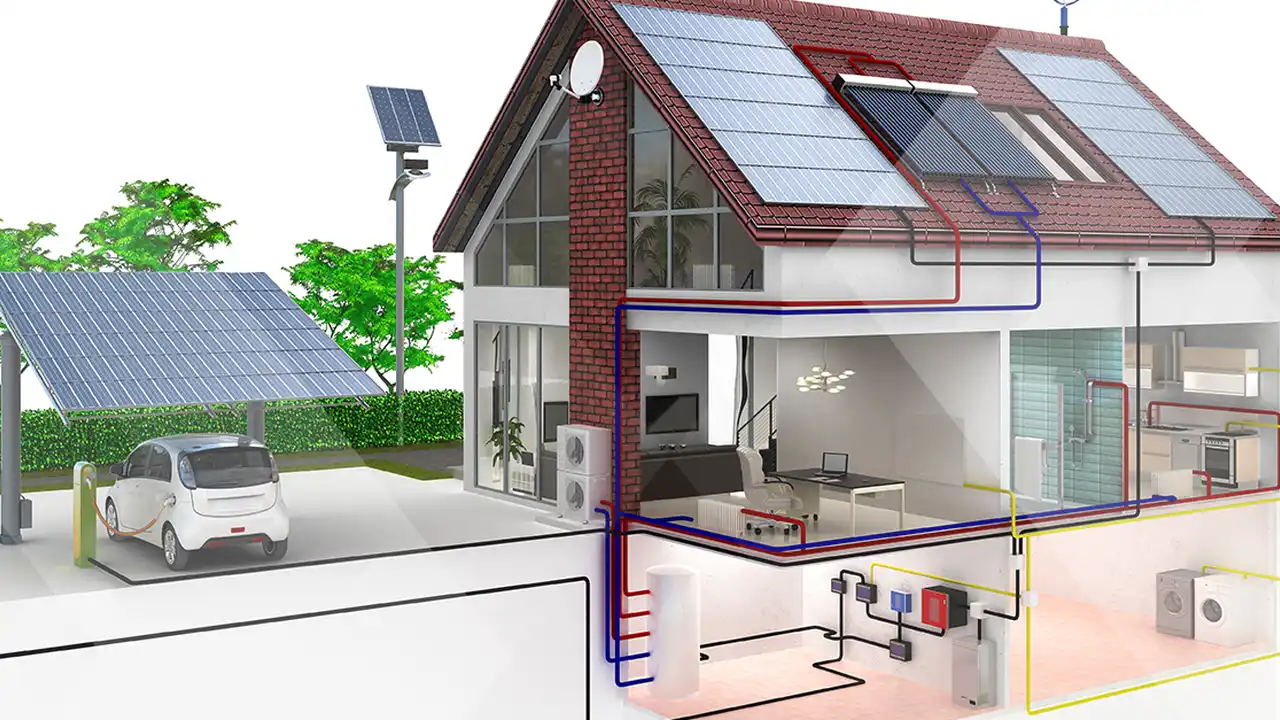
- Solar panel system with smart inverter (e.g., Enphase IQ series, cost varies widely, typically $15,000 - $30,000 for installation) integrated with Home Assistant for monitoring solar production and consumption.
- Total Estimated Cost: Highly variable, but expect significant investment for solar.
- Carbon Reduction Impact: Unparalleled insight into energy usage and production. Ability to create highly sophisticated automation rules to optimize energy consumption based on solar production, time-of-use electricity rates, and occupancy. This setup allows for truly intelligent energy management, potentially even enabling net-zero or energy-positive living.
The Future of Green Smart Homes and What to Look For
The smart home industry is constantly evolving, and the focus on sustainability is only growing. Here's what to keep an eye on:
AI and Machine Learning for Predictive Energy Management
Future smart home systems will leverage AI and machine learning even more to predict your energy needs and optimize consumption. Imagine a system that knows not only your habits but also the weather forecast, electricity grid demand, and even the carbon intensity of the energy being supplied at any given moment. It could then automatically adjust your home's energy usage to minimize your carbon footprint and save you money. This predictive capability will move beyond simple automation to truly intelligent resource management.
Integration with Renewable Energy and Grid Services
As more homes adopt solar panels and battery storage, smart home systems will become crucial for managing these distributed energy resources. They'll be able to optimize when to use grid power, when to use stored solar energy, and even when to sell excess energy back to the grid. This integration will turn individual homes into active participants in a smarter, greener energy grid.
Standardization and Interoperability
One of the biggest challenges in smart home tech has been the lack of universal standards. However, initiatives like Matter are aiming to create a unified standard for smart home devices, making it easier for products from different brands to work together seamlessly. This will simplify the process of building a truly integrated and energy-efficient smart home, allowing consumers to choose the best devices for their needs without worrying about compatibility issues.
Circular Economy Principles in Device Manufacturing
Beyond just energy consumption, the environmental impact of manufacturing and disposing of smart home devices is also a concern. Look for brands that prioritize sustainable materials, modular designs for easier repairs and upgrades, and robust recycling programs. Companies that embrace circular economy principles are not just helping you reduce your operational carbon footprint but also the embodied carbon in the products themselves.
Making the Smart Choice for a Greener Home
Choosing the best smart home system for carbon footprint reduction isn't about buying every gadget out there. It's about strategically selecting devices that address your home's biggest energy drains and integrating them into a cohesive system. Start with smart thermostats, then move to smart lighting and plugs. Consider smart blinds and appliances as you expand. The key is to leverage automation and data insights to make your home more efficient, reduce waste, and contribute to a healthier planet. Every small step you take with smart tech can lead to a significant positive impact on your carbon footprint.
:max_bytes(150000):strip_icc()/277019-baked-pork-chops-with-cream-of-mushroom-soup-DDMFS-beauty-4x3-BG-7505-5762b731cf30447d9cbbbbbf387beafa.jpg)