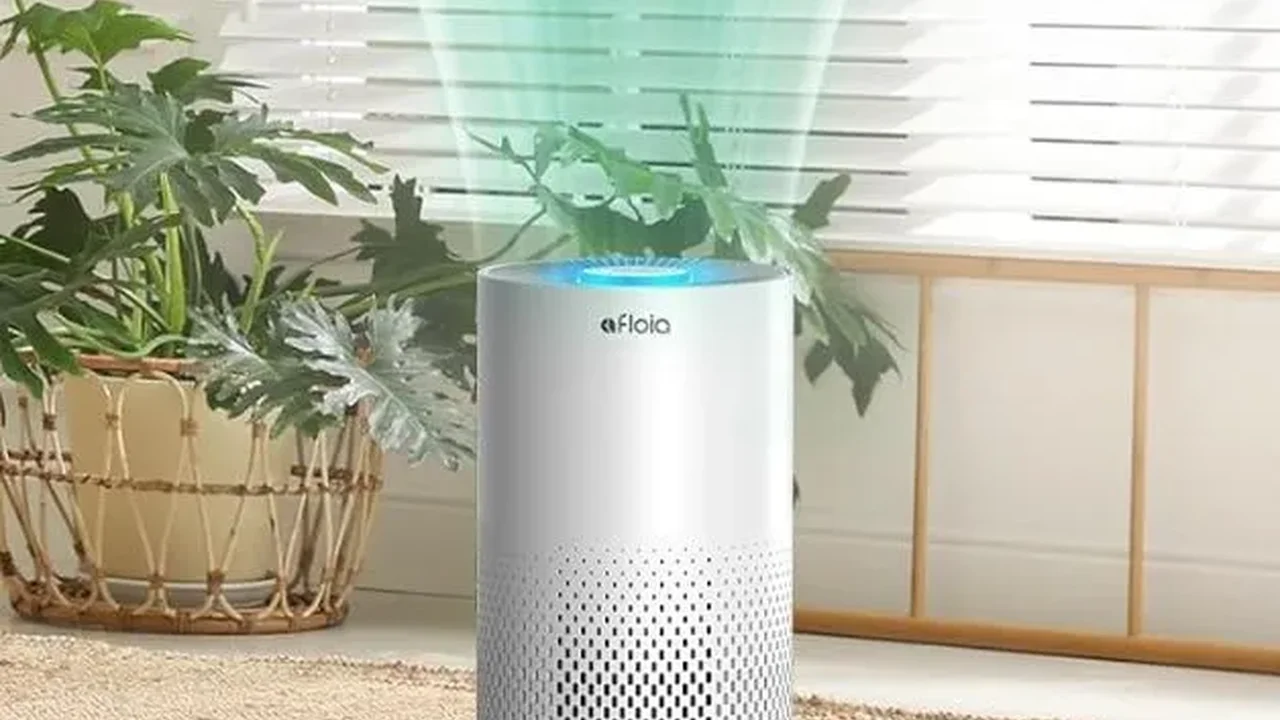
The Best Smart Air Purifiers for Cleaner Air
Why Smart Air Purifiers are a Must-Have for Modern Homes
Let's face it, the air inside our homes isn't always as clean as we'd like to think. From pet dander and pollen to dust mites and volatile organic compounds (VOCs) from cleaning products or furniture, our indoor environments can be surprisingly polluted. This is where smart air purifiers come into play. They're not just about filtering out particles; they offer advanced features like real-time air quality monitoring, app control, scheduling, and even integration with other smart home systems. This means you can breathe easier, literally, knowing your home's air is being continuously monitored and cleaned, often without you even lifting a finger. Smart air purifiers are particularly beneficial for people with allergies, asthma, or other respiratory issues. They can significantly reduce triggers, leading to fewer symptoms and a more comfortable living space. Even if you don't have specific health concerns, cleaner air can lead to better sleep, improved concentration, and a general sense of well-being. Plus, with smart features, managing your air quality becomes incredibly convenient.Key Features to Look for in Smart Air Purifiers for Optimal Performance
When you're diving into the world of smart air purifiers, there are a few key features you'll want to keep an eye out for to ensure you're getting the best bang for your buck and the cleanest air possible.Filtration Systems and CADR Ratings for Effective Air Cleaning
The heart of any air purifier is its filtration system. Most high-quality smart air purifiers use a multi-stage filtration process. This typically includes a pre-filter to capture larger particles like dust and pet hair, a True HEPA filter to trap 99.97% of airborne particles as small as 0.3 microns (think pollen, mold spores, and fine dust), and an activated carbon filter to absorb odors, smoke, and VOCs. Some advanced models might also include UV-C light sterilization or ionizers, though it's worth researching the potential ozone production of ionizers. The Clean Air Delivery Rate (CADR) is a crucial metric. It tells you how quickly the air purifier can clean a room of specific pollutants like smoke, pollen, and dust. Higher CADR numbers mean faster cleaning. You'll want to match the CADR to your room size. For example, a room of 200 sq ft might need a CADR of around 130-150 for effective cleaning.Smart Connectivity and App Control for Seamless Management
This is where the 'smart' in smart air purifier really shines. Look for models that offer Wi-Fi connectivity and a dedicated mobile app. The app should allow you to control the purifier remotely, adjust fan speeds, set schedules, monitor filter life, and most importantly, view real-time air quality data. Some apps even provide historical data, so you can track trends in your home's air quality.Air Quality Sensors and Auto Mode for Intelligent Operation
Good smart air purifiers come equipped with sensors that detect airborne particles (PM2.5, PM10) and sometimes even VOCs. The best ones will have an 'Auto Mode' that automatically adjusts the fan speed based on the detected air quality. This means the purifier only works as hard as it needs to, saving energy and extending filter life. It's a set-it-and-forget-it feature that makes air purification effortless.Noise Levels and Energy Efficiency for Comfortable Living
An air purifier that sounds like a jet engine isn't going to be very pleasant, especially in a bedroom or living area. Check the noise levels, usually measured in decibels (dB), at different fan speeds. Many smart purifiers have a 'sleep mode' that operates at a very low, almost inaudible level. Energy efficiency is also important, especially if you plan to run the unit continuously. Look for Energy Star certified models.Design and Portability for Aesthetic and Practical Use
While performance is key, the design of the air purifier matters too. Many modern smart purifiers are designed to blend seamlessly into your home decor. Consider the size and weight if you plan to move it between rooms. Some models are sleek and compact, while others are larger and more powerful, suitable for open-plan living areas.Top Smart Air Purifier Recommendations for Various Needs
Let's dive into some specific product recommendations, considering different use cases and budgets.Coway Airmega 200M: A Reliable All-Rounder for Medium Rooms
The Coway Airmega 200M is a perennial favorite, and for good reason. It's a fantastic all-rounder that consistently performs well in medium-sized rooms (up to about 361 sq ft). It features a four-stage filtration system: a pre-filter, an activated carbon filter, a True HEPA filter, and a vital ionizer (which can be turned off if you prefer). Its air quality sensor and auto mode work flawlessly, adjusting fan speed based on real-time conditions. The design is sleek and unobtrusive, making it easy to fit into most home decors. It's also relatively quiet, especially on lower settings, making it suitable for bedrooms.
Smart Features: While not as 'smart' as some newer models with full app control, it does have an air quality indicator light that changes color based on air purity, and an auto mode. Some newer Coway models offer more advanced smart features, but the 200M remains a solid choice for its core performance.
Ideal Use Case: Bedrooms, living rooms, or home offices up to 361 sq ft. Excellent for general air purification, allergies, and pet dander.
Pros: Excellent filtration, effective auto mode, quiet operation, sleek design, reliable performance.
Cons: Lacks full app control and advanced smart features found in pricier models.
Estimated Price: $200 - $250 USD
Blueair Blue Pure 211+ Auto: Great for Large Spaces and Simplicity
If you have a larger open-plan living area or a spacious bedroom, the Blueair Blue Pure 211+ Auto is a fantastic choice. It's known for its impressive CADR, meaning it can clean a lot of air very quickly (up to 550 sq ft). It uses a combination of a washable pre-filter, a particle filter, and an activated carbon filter. What makes it 'smart' is its auto mode, which uses a particle sensor to adjust fan speed automatically. It's also incredibly simple to use, with a single button control.
Smart Features: Auto mode based on particle sensor. No Wi-Fi or app control, keeping it straightforward and user-friendly.
Ideal Use Case: Large living rooms, open-plan areas, or large bedrooms where powerful and fast air purification is needed. Great for those who prefer simplicity over extensive app features.
Pros: High CADR for large rooms, effective filtration, simple operation, quiet for its power, washable pre-filter.
Cons: No advanced smart features like app control or scheduling, larger footprint.
Estimated Price: $250 - $300 USD
Levoit Core 400S: Feature-Rich Smart Purifier for Medium to Large Rooms
The Levoit Core 400S is a popular choice for those seeking a balance of performance, smart features, and affordability. It's designed for rooms up to 403 sq ft and boasts a 3-stage filtration system (pre-filter, True HEPA, activated carbon). Where it truly shines is its smart capabilities. It connects to the VeSync app, allowing for remote control, scheduling, fan speed adjustment, and real-time air quality monitoring (PM2.5). It also integrates with Amazon Alexa and Google Assistant for voice control. The display on the unit itself shows air quality readings, which is a nice touch.
Smart Features: VeSync app control (remote control, scheduling, timer, filter life), real-time PM2.5 display, auto mode, sleep mode, voice control via Alexa/Google Assistant.
Ideal Use Case: Bedrooms, living rooms, or offices where smart home integration and detailed air quality monitoring are desired. Excellent for allergies, pets, and general air purification.
Pros: Excellent smart features, effective filtration, quiet operation, clear air quality display, voice assistant integration, good value.
Cons: Filters can be a bit pricey to replace.
Estimated Price: $200 - $220 USD
Dyson Purifier Cool TP07: Premium Air Purification with Fan Functionality
If you're looking for a premium option that combines air purification with a powerful fan, the Dyson Purifier Cool TP07 is a top contender. Dyson purifiers are known for their sleek, bladeless design and advanced filtration. The TP07 captures 99.97% of particles as small as 0.3 microns and uses an activated carbon filter to remove gases and odors. Its smart features are robust, connecting to the Dyson Link app for comprehensive control, real-time air quality reporting (PM2.5, PM10, VOCs, NO2), and scheduling. It also oscillates to circulate purified air throughout the room.
Smart Features: Dyson Link app control (remote control, scheduling, detailed air quality reports, filter life), auto mode, night mode, voice control via Alexa/Google Assistant/Siri.
Ideal Use Case: Living rooms, bedrooms, or offices where you want both high-performance air purification and a cooling fan. Great for tech enthusiasts who appreciate detailed data and premium design.
Pros: Excellent filtration, dual fan/purifier functionality, comprehensive smart app, detailed air quality reporting, sleek design, quiet for its power.
Cons: Premium price point, filters are expensive.
Estimated Price: $500 - $600 USD
Winix 5500-2: Budget-Friendly with PlasmaWave Technology
For those on a tighter budget who still want effective air purification, the Winix 5500-2 is a solid choice. It's designed for rooms up to 360 sq ft and features a True HEPA filter, an activated carbon filter, and Winix's PlasmaWave technology (which can be turned off). It has an air quality sensor and an auto mode that adjusts fan speed. While it doesn't have Wi-Fi or app control, its auto mode makes it 'smart' enough for many users, automatically reacting to changes in air quality.
Smart Features: Air quality sensor with auto mode. No Wi-Fi or app control.
Ideal Use Case: Bedrooms, small living rooms, or offices where budget is a primary concern but effective air purification is still desired. Good for general air cleaning and pet owners.
Pros: Very effective filtration for the price, good CADR, quiet on low settings, auto mode, affordable filters.
Cons: No smart app control, PlasmaWave technology might be a concern for some (though it can be disabled).
Estimated Price: $150 - $180 USD
:max_bytes(150000):strip_icc()/277019-baked-pork-chops-with-cream-of-mushroom-soup-DDMFS-beauty-4x3-BG-7505-5762b731cf30447d9cbbbbbf387beafa.jpg)